The oldest fashion magazine in the world
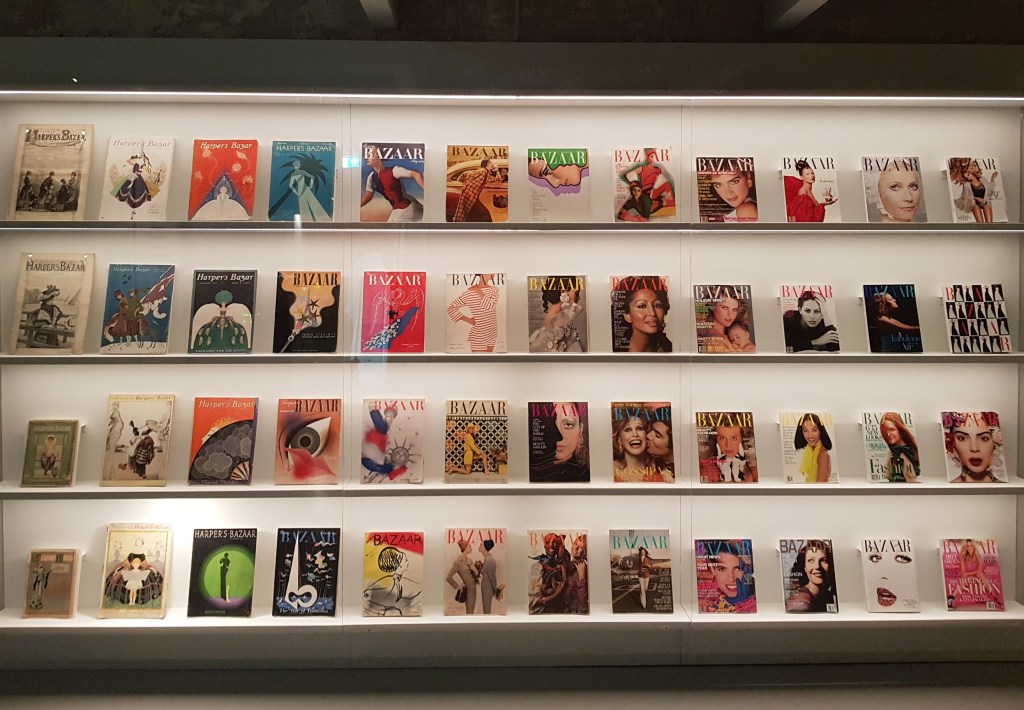
The Musée des Arts Décoratifs in Paris is home to one of the leading fashion and textiles collections in the world. Costumes and fabrics however are tricky to display, since they are vulnerable to the light and other environmental conditions. The MAD organizes at least two fashion exhibitions per year to showcase and rotate its fashion treasures. The same museum is also home to one of the largest advertising and graphic collection, so it was quite obvious that an exhibition on the oldest fashion magazine in the world would be the perfect opportunity to display sixty iconic dresses, original artworks, pioneering photography and the best in graphic design.
Harper’s Bazaar was launched 153 years ago, in 1867. France had an emperor, the Eiffel Tower had not been built yet and the Civil war, in the US, had ended just two years earlier. Since, the magazine has been following current affairs in culture and society, addressed to modern women and was described at its beginnings as “a repository of fashion, pleasure and instruction”. Indeed, the exhibition conveys exactly that: the history of the oldest fashion magazine as a meeting point of styles, fine arts, applied arts, photography and literature.

Over 153 years, some of the most talented editors and artists have collaborated with Harper’s Bazaar, and their signature determined the way we look at fashion today. We can distinguish 5 broad periods, led by inspirational figures, that reflected their times. The first, was Mary Louise Booth, one of the best paid women at the time. Very cultivated, very much politically and socially involved, she was a Francophile and an intellectual. Her love for French fashion as well as her esthetics will be transmitted to her readers. As shown in the picture above, dresses by Charles Frederic Worth, aka the inventor of haute couture, featured often in the covers.

The second period stretches from the First World War to the late 30s. William Hearst, the all-powerful, press magnate bought the magazine, hired Erte, the most avant-garde graphic designer for the covers, while photography, that had appeared in the inside pages, was signed by Alfred de Meyer and Man Ray. These are the roaring 20s, women adopted the garçonne style, had the bob cut, and skirts were short enough for dancing. Dazzling dresses by Paul Poiret and Jean Lanvin are on display, as well as one by Coco Chanel, who had just started her business, along with its picture on Harper’s Bazaar. Photography was black and white, so fashion had to produce photogenic dresses to be printed in the press.
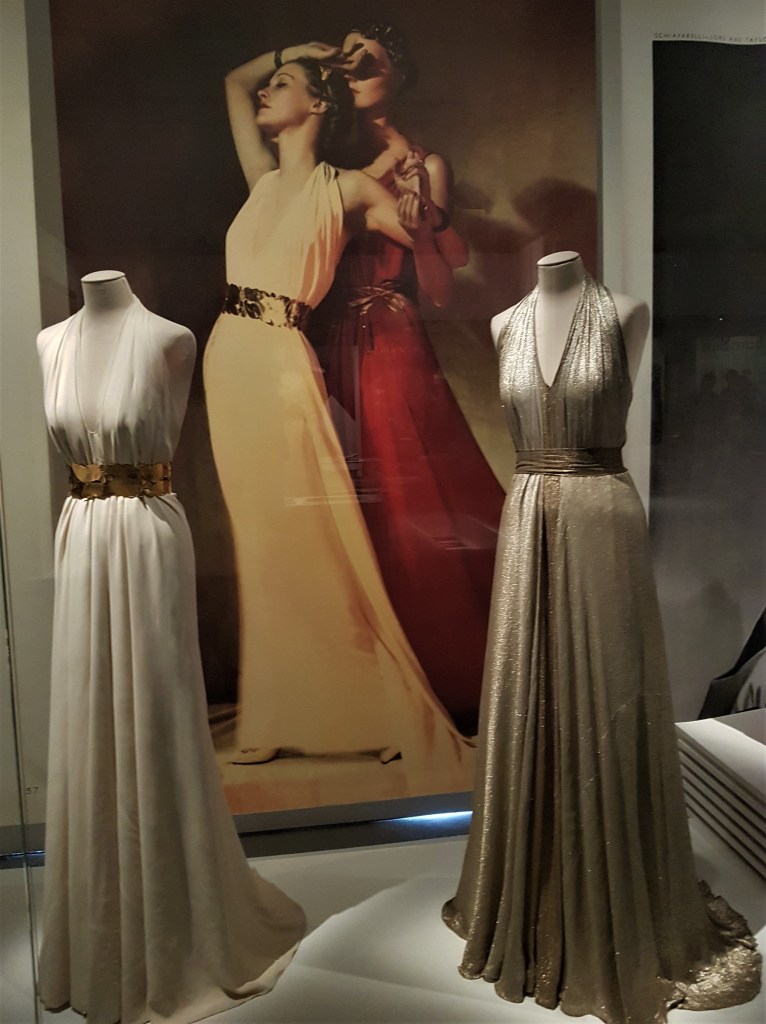
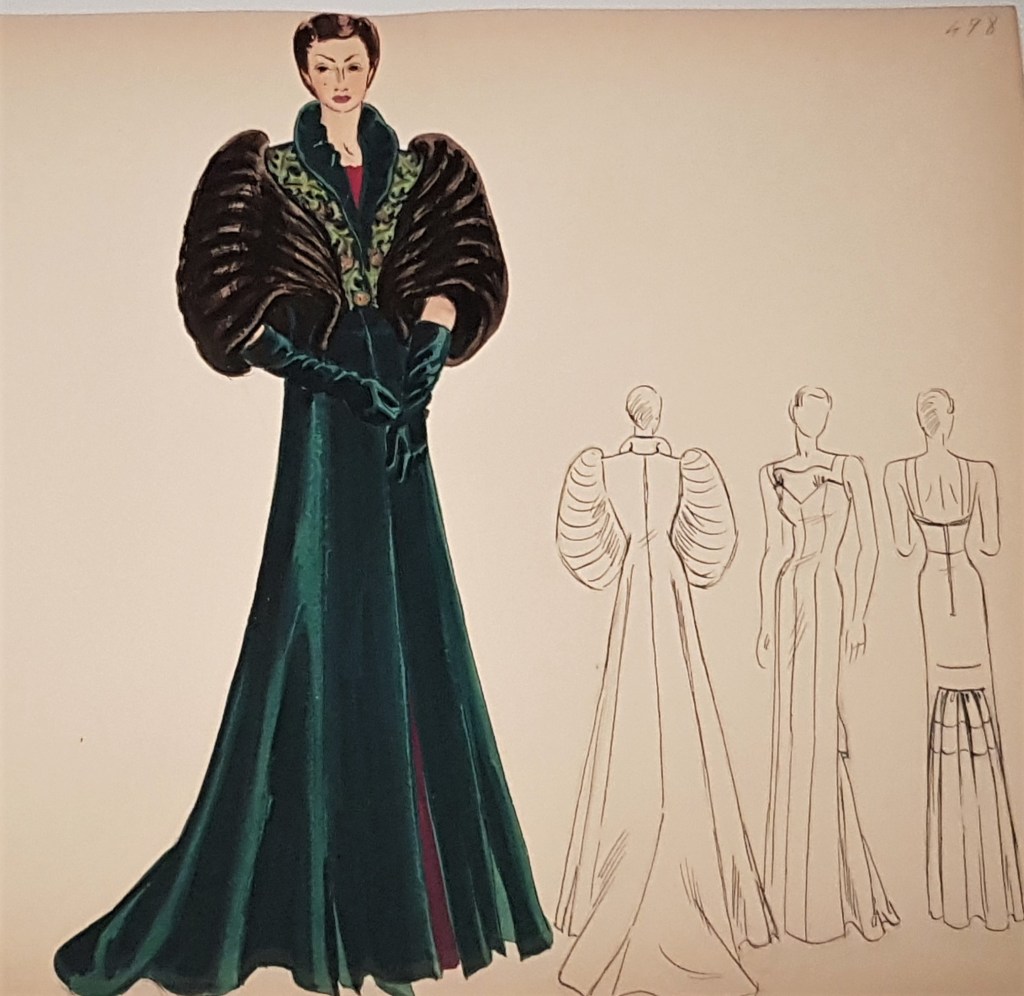
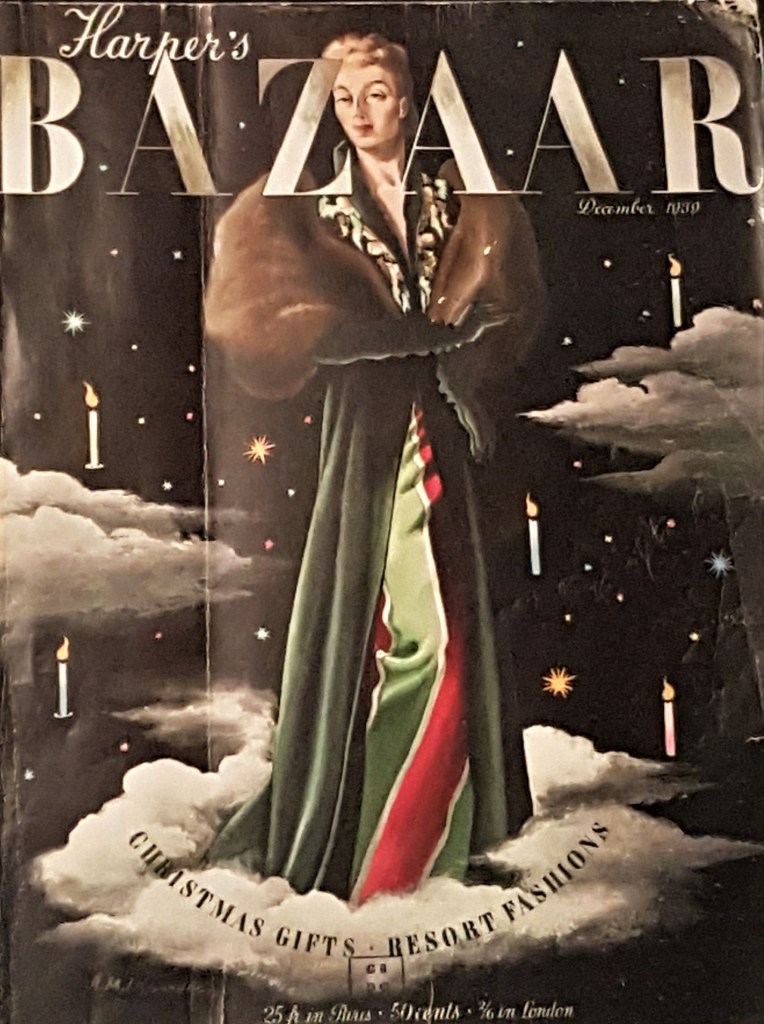
Another great dame of fashion was Madeleine Vionnet, who had launched a style inspired from ancient statues, with long, pleated, fluid, bias-cut dresses. Once again, through the images of the magazine, the garments took another dimension, coloured photography had arrived and French fashion designers enjoyed an appropriate exposure of their talent across the ocean. On display, there is also a cover featuring a dress by Elsa Schiaparelli, the legendary rival of Coco Chanel, next to the original sketch.
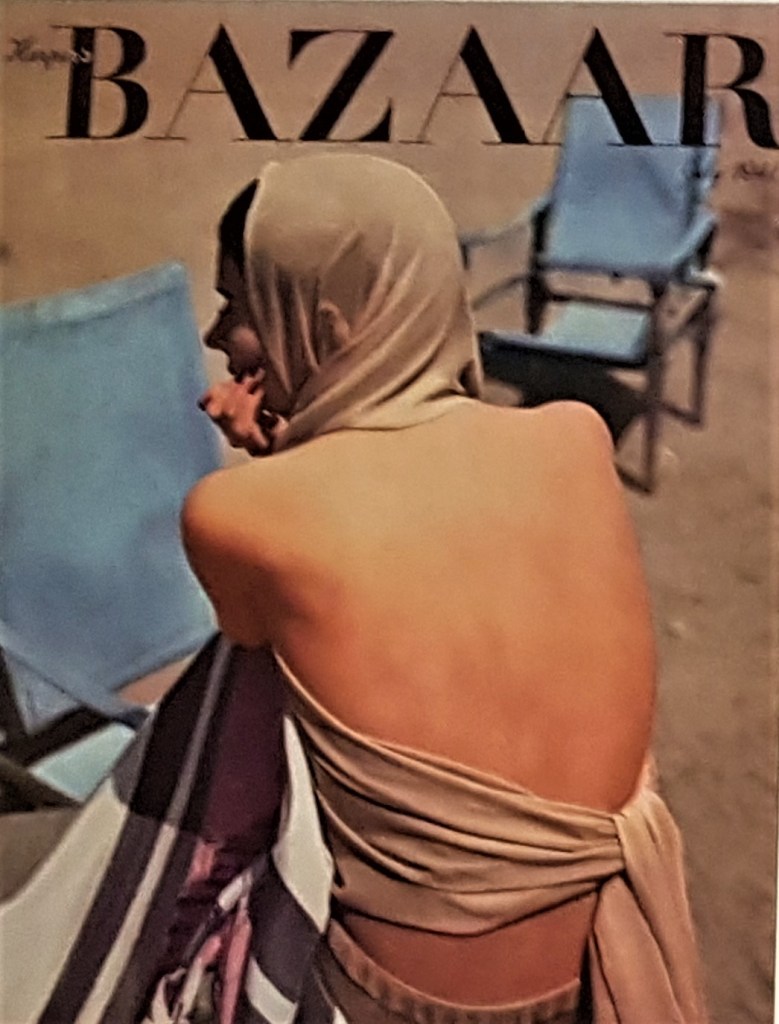

In 1934, Carmel Snow arrived as the chief editor, and the golden era began. A regular already in the French fashion scene and a friend of all the famous artists in Paris, she hired Alexey Brodovitch as the chief graphic designer and Diana Vreeland as the fashion editor: the trinity was born. Snow entrusted the most daring photographers with the fashion shootings, among which one of the greatest women photographers of the 20th C.: Louise Dahl-Wolf. She photographed outdoors and the new colour films, with a special luminosity, perfectly captured the suntan. Suntan became trendy, and remained until recently, while women weren’t photographed anymore like statues but like living creatures enjoying life.
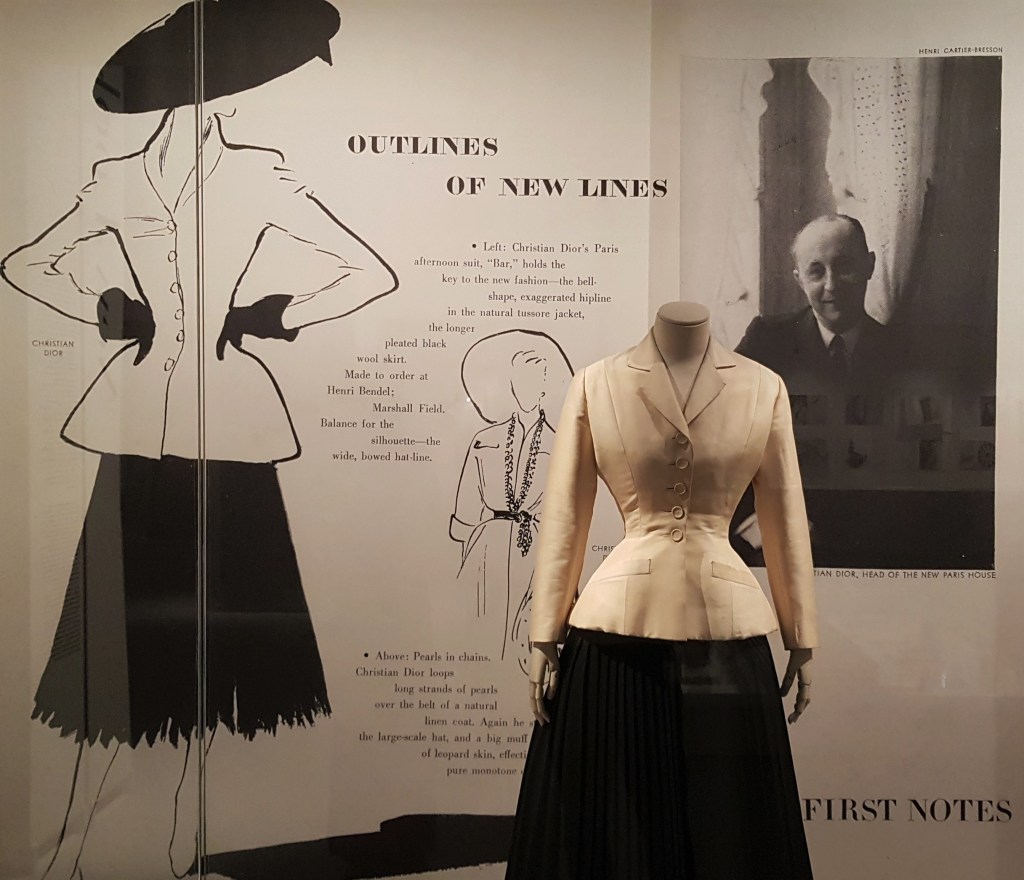
Carmel Snow had also the nose to spot and promote talent. In 1947, she assisted at the first show of a designer still unknown. His name was Christian Dior, and at the end of his show Snow exclaimed the famous phrase “this is a new look” and the rest is history. She was referring not only to the lines, the fabrics and the cut, but to the whole new look of a woman-flower as opposed to the woman-soldier that everyone wanted to forget at the end of the Second World War. We can admire one of the treasures of the museum collection, the Bar Suite, from this first, ground-breaking show by Dior.
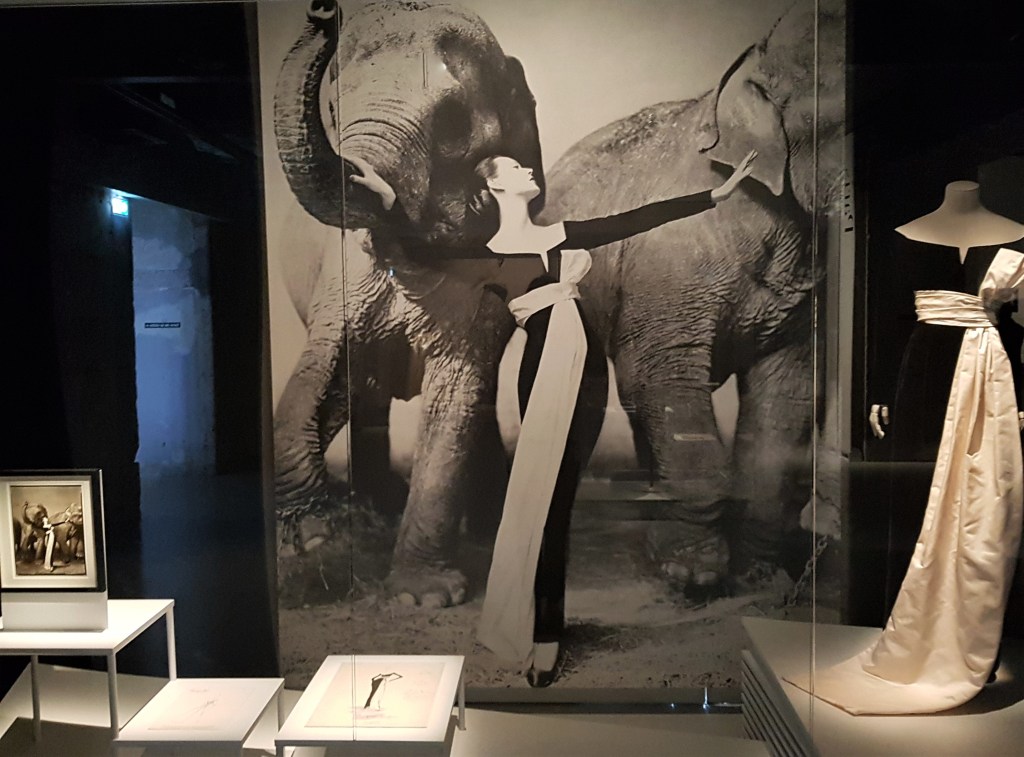
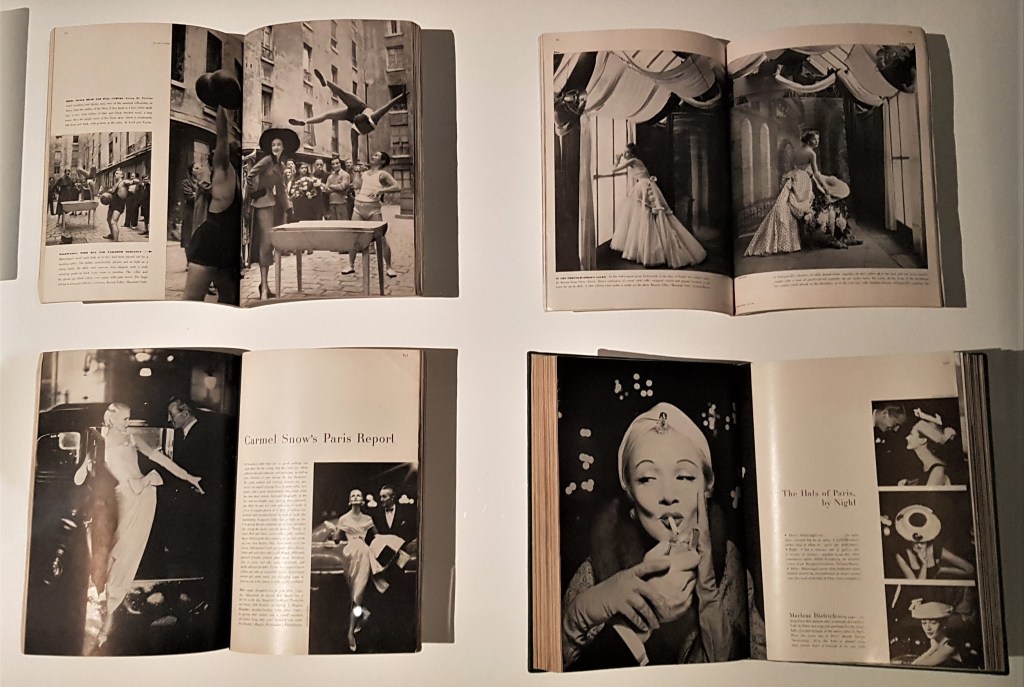
Richard Avedon, a 21 year-old with only an experience of ID photos, joined also her team, and his career was launched. Some of the most memorable fashion photography of the 20th C has been produced by him, featured in the exhibition along with the original gowns by Dior and Balenciaga.
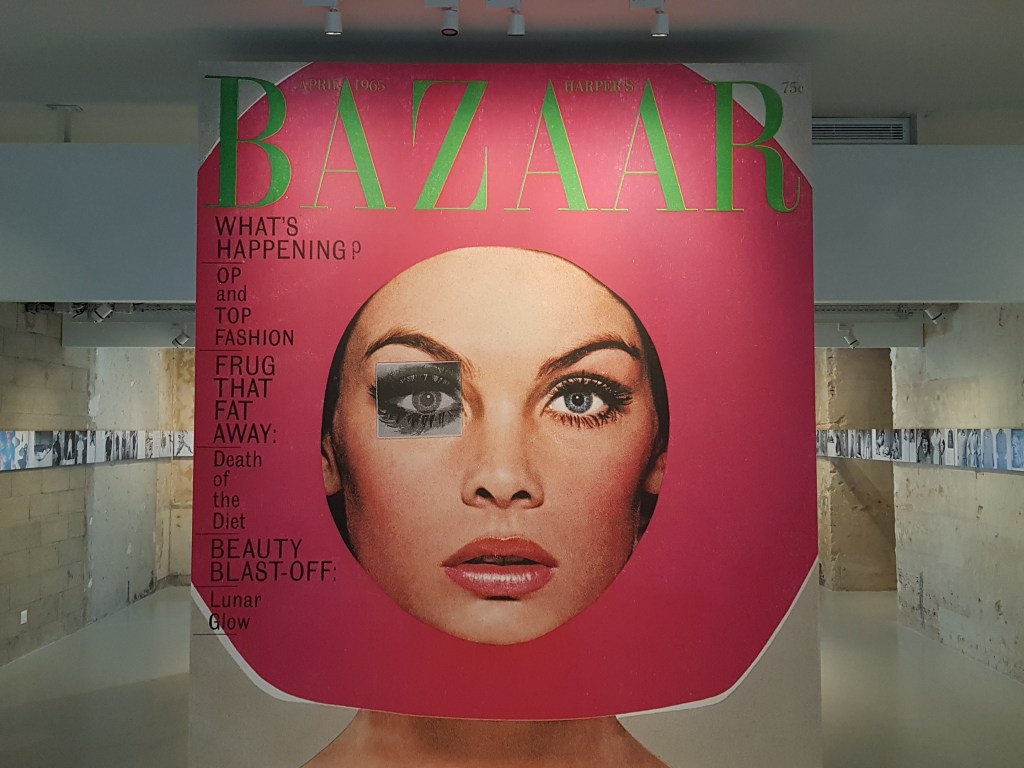
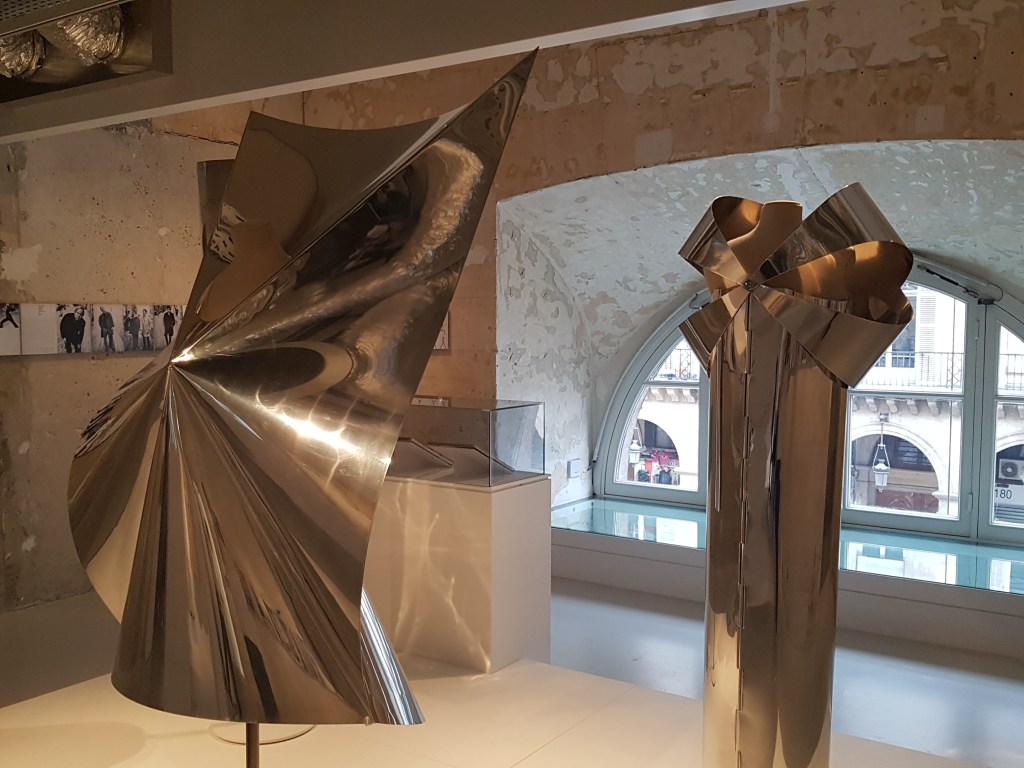
A special tribute is paid to the April 1965 issue, entirely photographed and edited by Richard Avedon. In the same section, the original metallic costumes from the cult film Who are you, Polly Maggoo? are exhibited, recreating a very much 60s feeling. Carmel Snow had passed away, Diana Vreeland had left for Vogue, and Richard Avedon would follow her soon. The fourth period begins, lasting until the early 90s.

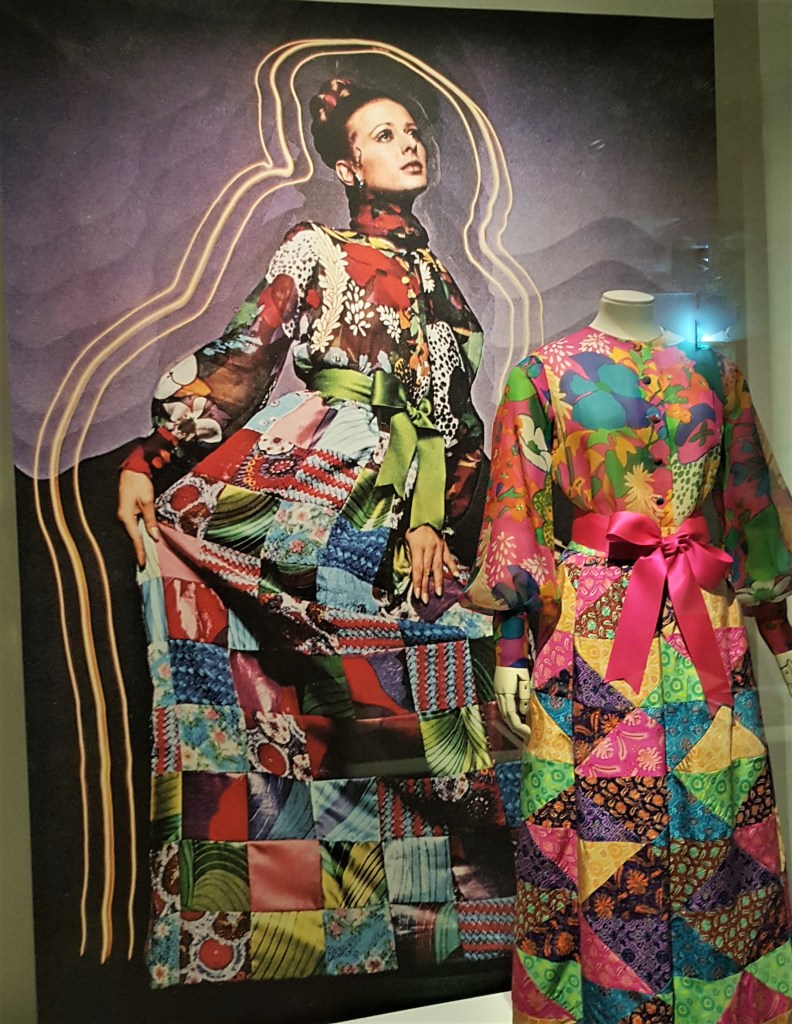
The 70s were colourful. Hiro’s photography marked another breakthrough due to his innovative angles and techniques. Oriental inspiration and contemporary art would change the visual aspect of fashion photography, preparing the powerful arrival of the Japanese designers in the following years.
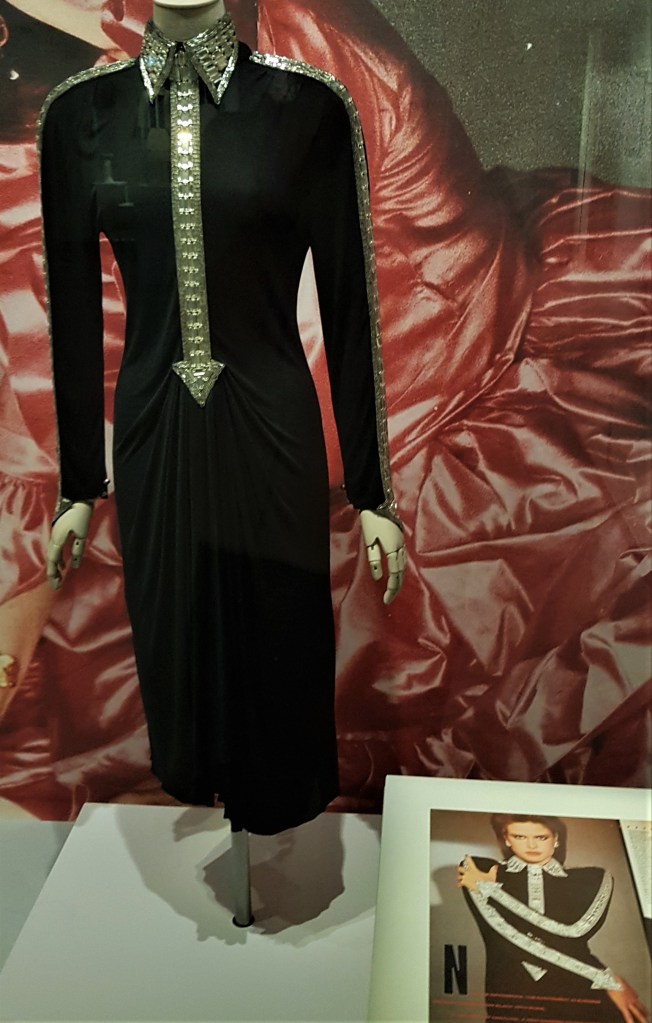
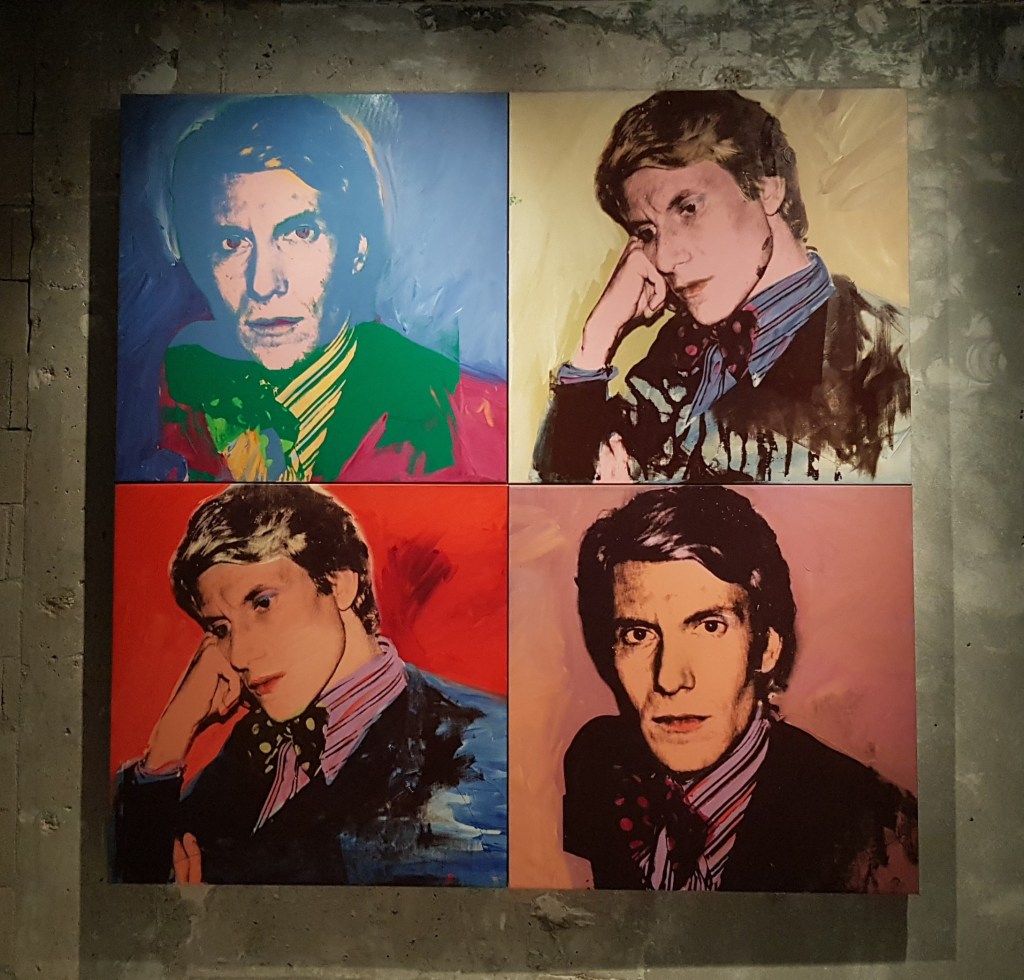
In the 80s, Harper’s Bazaar took another direction, always celebrating fashion, but now stars and divas would monopolize the covers. Close-ups and new high definition films allowed the smallest details to be printed, and fashion followed with new fabrics, like satin, taffetas or metallic, to exploit the new opportunity for glittering images.
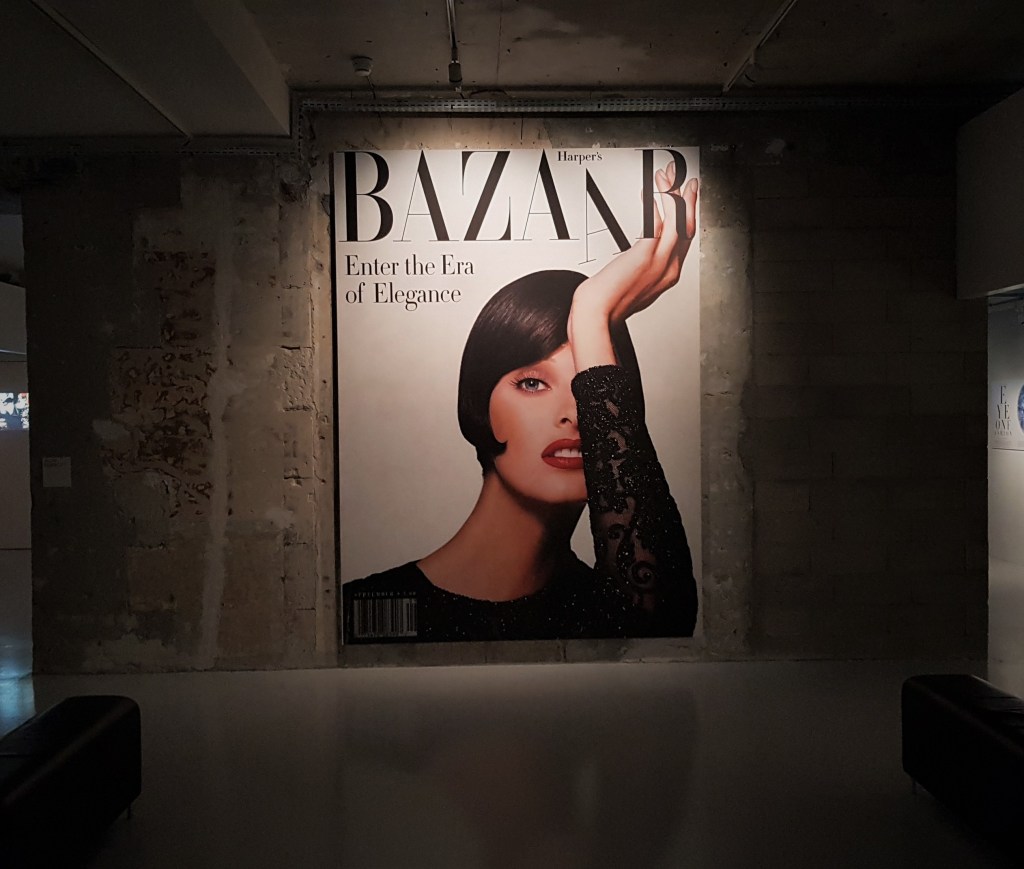

In 1992 Liz Tilberis joined Harper’s Bazaar which had lost its appeal and was struggling to keep up with Anne Wintour’s Vogue. It was a very wild bet, and indeed Tilberis, by hiring Peter Lindbergh, Patrick Demarchelier and Fabien Baron, succeded in forging a new identity: elegance (in spirit and appearances), cutting edge photography and radical graphic design. In the room dedicated to her years, we can fully appreciate her achievement, with the super models looking more natural then ever and page lay outs that break away from the kitsch of the previous years.

Post 9/11 and in the era of internet, the whole printed press had to reinvent itself. Glenda Baily, the head of Harper’s Bazaar until earlier this year, fully understood that. A magazine is not a blog, but it reaches out to the same, fashion conscious public. She created a new style, theatrical enough for covers to be unforgettable and fashion photography like blockbuster productions. Mock ups, prototypes, spreads by Jean-Paul Goude and haute couture dresses reveal the backstage of a fashion magazine in the 21st C.

The last room is the most spectacular, with haute couture dresses that most of us would never get this close to, and the conclusion that Harper’s Bazaar may have changed many facets, but it always remains a “repository of fashion, pleasure and instruction”.
Harper’s Bazaar, First in Fashion, MAD Paris, until January 3, 2021.
All images ©TheChoiceOfParis
 The Choice of Paris