Under the Volcano

Archaeology is a tricky subject to display in a museum. It is rather about ruins and artefacts that have lost their youth long ago. Plus, one needs some basic background in history and a lot of imagination to fully appreciate. By no means archaeology displays are inferior to other kinds of exhibitions, but let’s say that they are less user friendly.
Pompeii is one of the most famous archaeological sites in the world, not only because of the dramatic volcanic impact but also because it is so well preserved. Herculanum, the second city burried under the debris of the Vesuvius is less known because the lava hit it first with more disastrous effects on the conservation of objects, architecture or human bodies.
The Grand Palais in Paris hosts a very informative exhibition on Pompeii, with the story before and after the eruption. The exhibition is neither too long, neither too short, but long enough to give a good description of this small provincial but wealthy town and most importantly to display the latest archaeological discoveries in relation to the larger picture. It is described as an immersive exhibition and indeed multimedia is used in a clever and efficient way, along with artefacts helping visitors to get a very good idea about the legend of Pompeii.
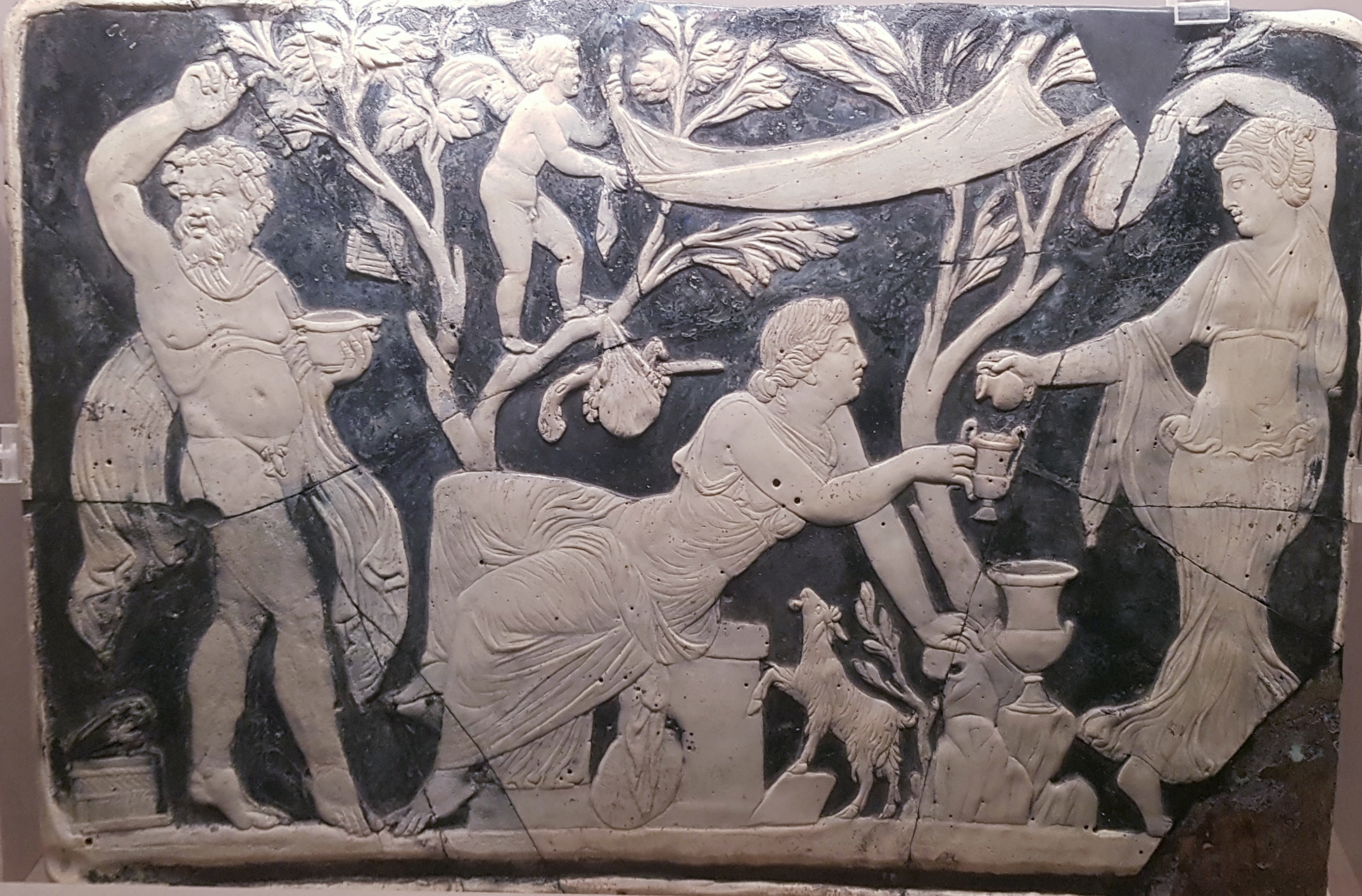

The population of Pompeii was surrounded by beauty; the town was small but dynamic and cosmopolitan. The houses were decorated and the inhabitants paid a lot of attention to their looks. The cameo glass above is a panel attached to a piece of furniture, demonstrating the highly sophisticated technique of layered and etched glass that would be later reproduced by artists across Europe. The precious emerald necklace bears witness to the refinement of jewellery making.
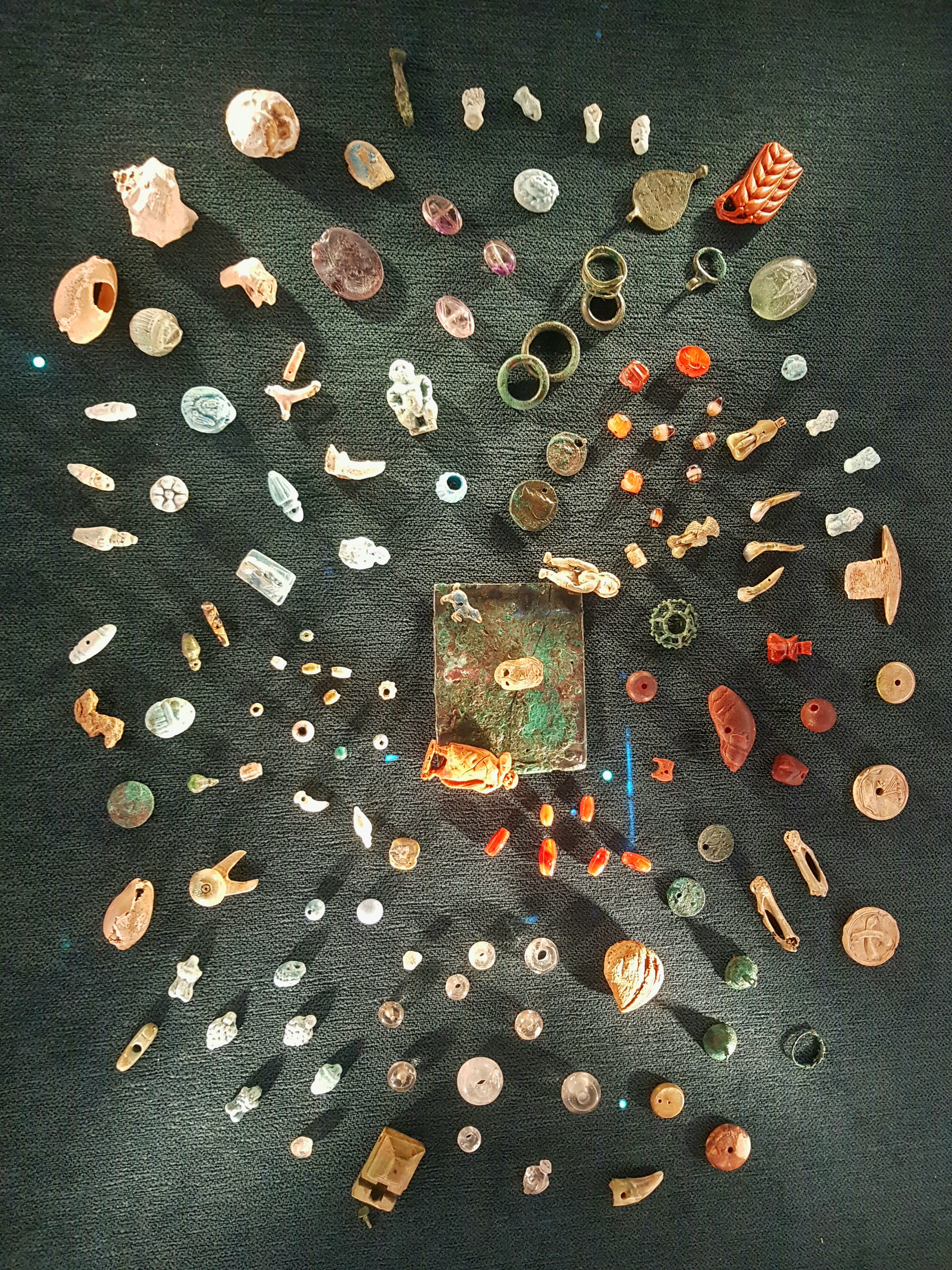
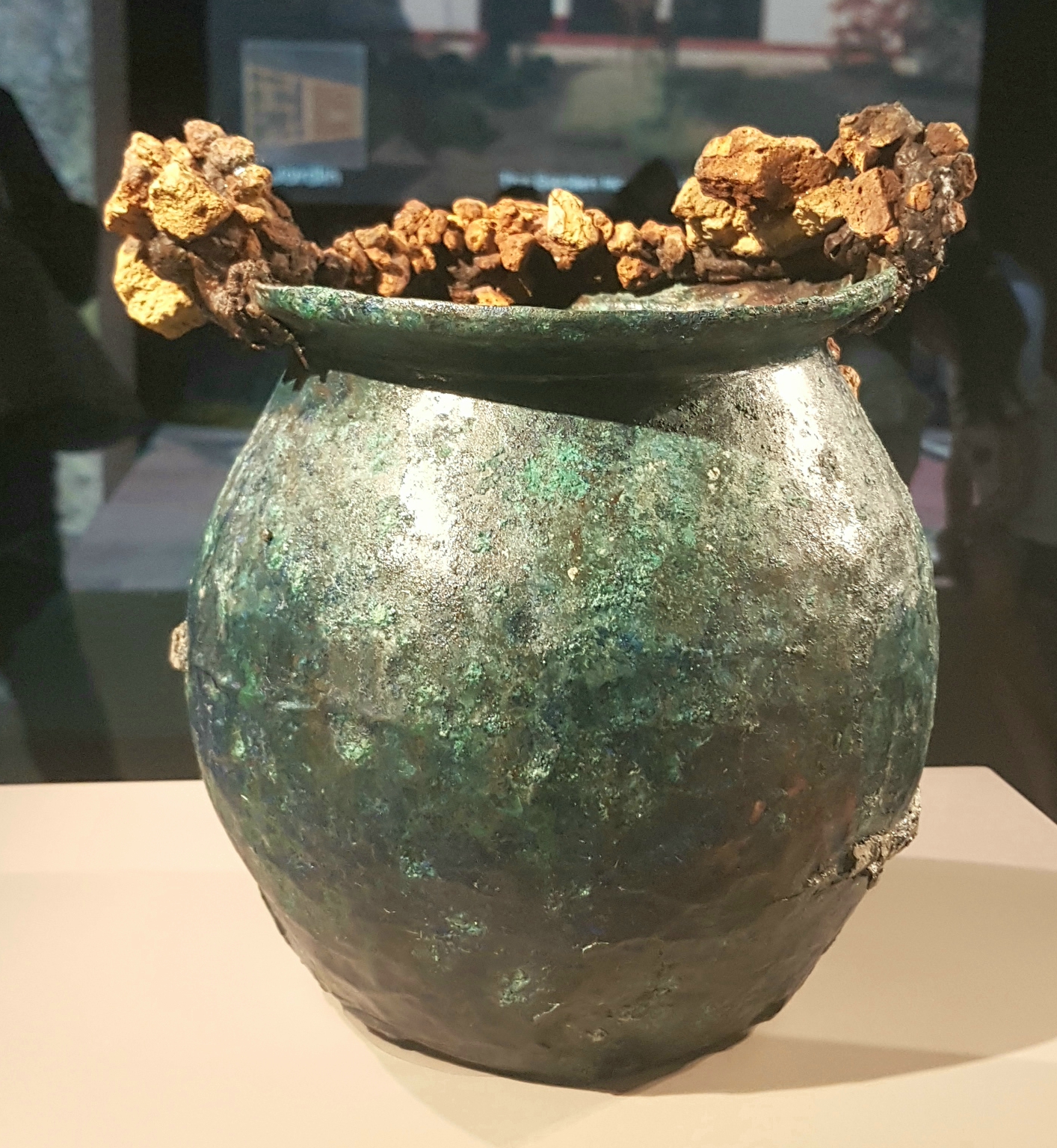
As far as daily life is concerned, more artefacts shed light on what we know. A treasure of amulets, in various shapes, colours and materials inform us on their beliefs and superstitions. They were worn as pendants or sewn onto clothes to protect from illnesses or bad omens. The bucket in bronze has the lapilli from the volcano attached to the top under the extreme temperature, reminding us that life stopped abruptly in just a matter of a few hours.
Extremely well made short films give an overview of life in Pompeii before that fatal day in 79 AD. The land was fertile, next to the river Sarno, on the bay of Napoli. Temples were honouring the patron gods and a busy market satisfied the needs of the population, of roughly 20 000. Baths were essential buildings for the social life and were often decorated with relevant frescoes. Theatres could accommodate up to 5000 spectators, a very high percentage of the population. Their diet was sophisticated and various meals have been found carbonised in the ovens and bakeries across town.
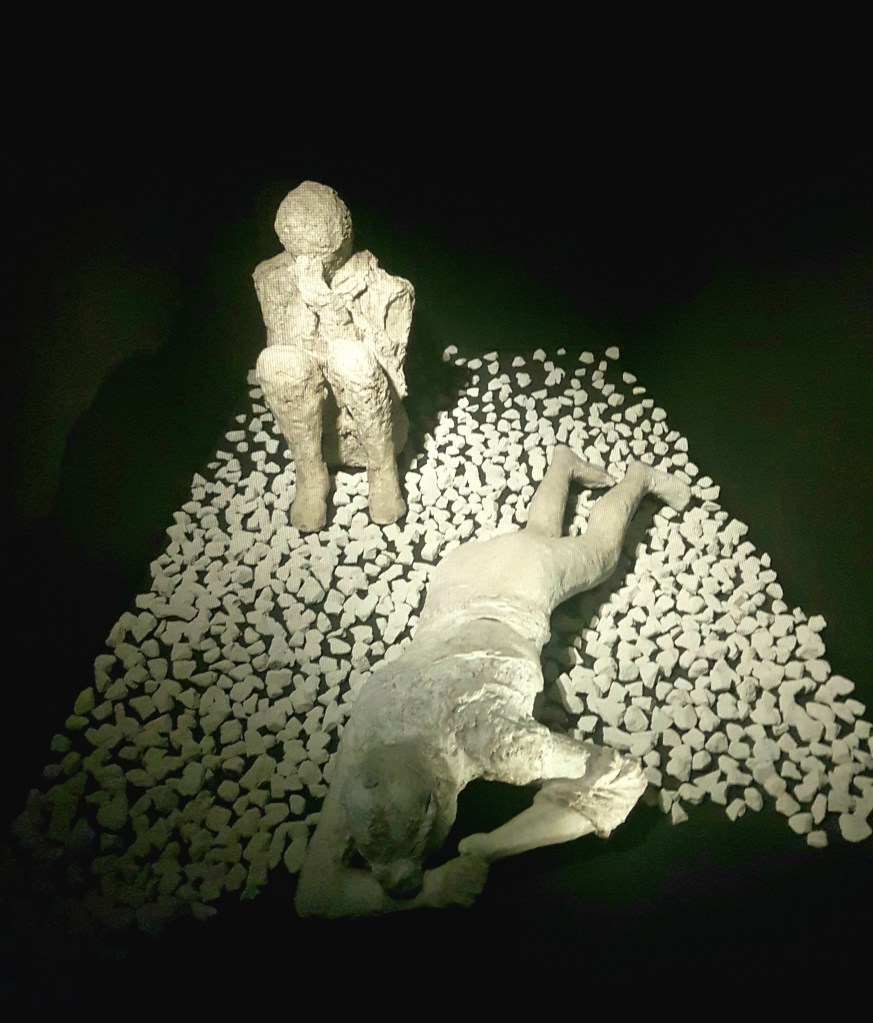
Films narrate as well the geological events, hour by hour, in simple terms that help understand the magnitude of the distraction and why the population was caught by surprise. No exhibition about Pompeii would of course be complete without the plaster casts of the victims, estimated at about 1000 people. The technique was invented in 1863 consisting in pouring plaster in the cavities left due to the hot ash covering the bodies which rapidly cooled after it had burned the organic substance and becoming solid to be used as moulds.
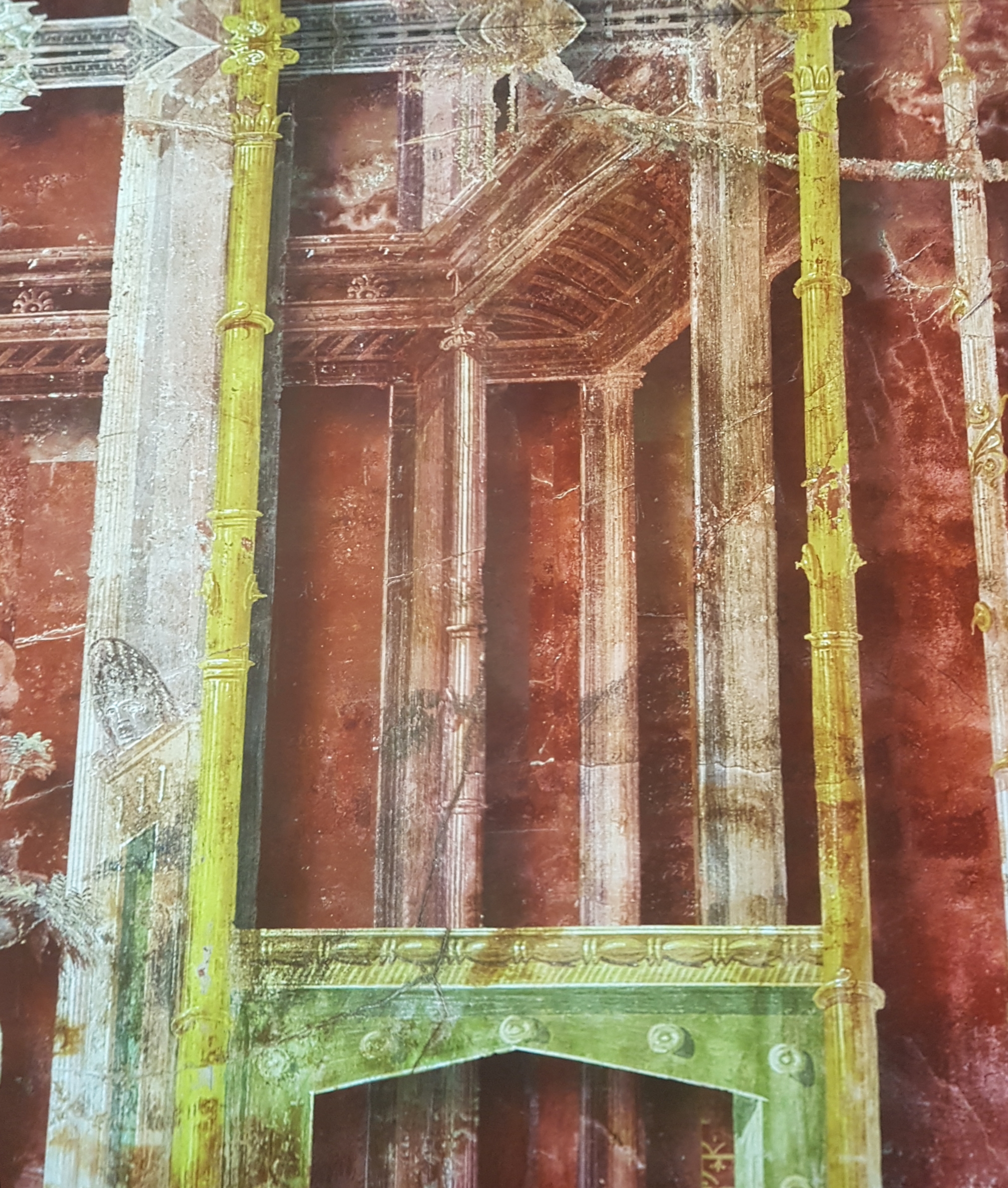


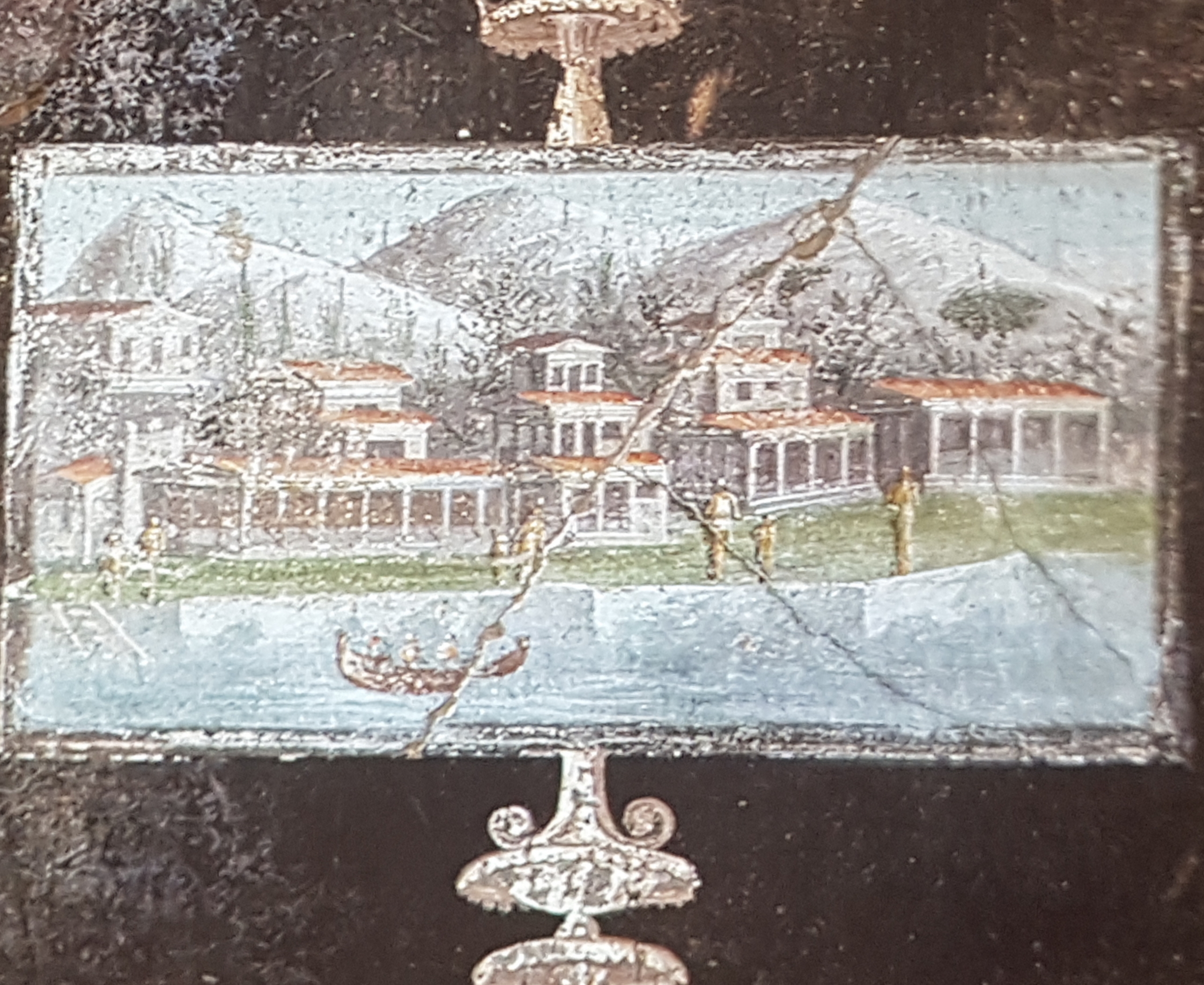
In one of the exhibition rooms, a selection of impressive frescoes, found in the villas of Pompeii, is projected in high resolution. Ancient paintings are very rare today and although we know that both the Greeks and the Romans had reached an extraordinary level of realism, it is rather through vases that we know about this art. The wall paintings unearthed in Pompeii reveal this lost art, so colourful and so expressive. This is absolutely the room that one must take time, sit down and enjoy the images, feeling the closest possible to the interior of the villas.
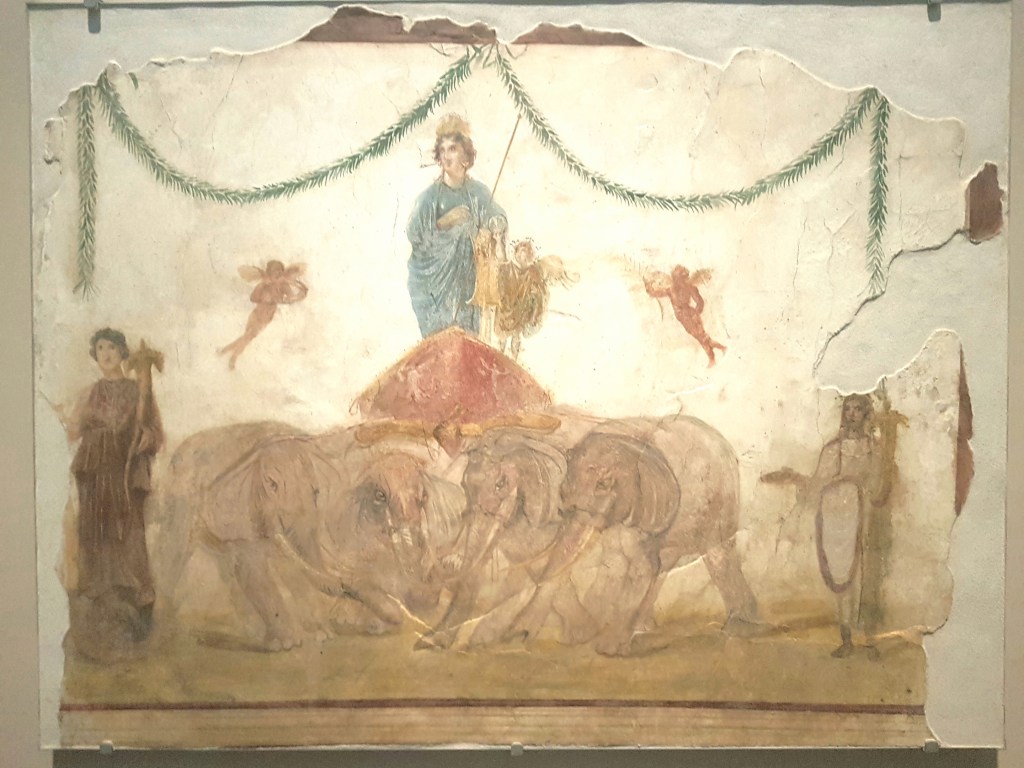
Frescoes of course cannot be easily transferred for exhibitions, but an original one is hanging in the Grand Palais exhibition. Venus is standing on a quadriga, drawn by four elephants. Cupid features too in the composition holding the globe.
The term immersive may scare the regular museum goers and art lovers, but the exhibition keeps the perfect balance between authentic exhibits and media to support all the information. At these times of rare travels, for an instance we feel like being in Italy. And for those considering visiting with family, every 15 minutes Vesuvius erupts virtually to the awe of the public of all ages.
Pompeii. Immersive Exhibition. Archaeological Treasures. New Discoveries. Grand Palais, Paris, until September 27, 2020.
All images (c) TheChoiceOfParis
 The Choice of Paris