Back to the basics of art_
Drawings are an art form that is not supposed to hang in a museum wall. Most drawings are simple preparatory stages towards the final artwork, or plain sketches to illustrate, communicate and conserve an idea before it slips away. It is often by miracle that preparatory drawings have come down to us. At the moment, we have the chance to admire two drawing collections in Paris, a private and a public one. The first, is the collection of Louis-Antoine and Véronique Prat and the second, is the collection of the Cabinet des Dessins of the Decorative Arts Museum (more on a future blog).
Louis-Antoine and Véronique Prat are both art-historians with the eye and the passion to collect. However, collecting does not correspond to all budgets, and they began almost 50 years ago by buying affordable art, meaning drawings. They certainly had the necessary knowledge and experience but sometimes they had also to deal with unscrupulous sellers, that takes a different talent. Their example is inspiring as still today there are thousands, if not millions, of sheets of paper, tucked away somewhere, waiting to be identified and evaluated. The couple has amassed the most prestigious private collection of drawings in France, following their taste and their instinct, and whose masterpieces are currently on display at the Petit Palais.
The period collected stretches from the 17th to the early 20th century and the artworks are mainly the drafts of famous paintings by famous artists. Those pieces strike us as we realize that we are a few moments before the creation of a masterpiece, sneaking on the creative process or even in the hesitations and the doubts of their maker. The artist doesn’t know it yet, but we do know where those lines will lead!

The couple had always an attraction for the human figure, and private collections invite us to look at art from a different, more personal angle. The broad themes explored by the exhibition illustrate the researches and the accomplishments in the field of figure painting. The 17th C French art, also known as the Grand Century (Grand siècle) was the century of the Sun King, Louis 14th, and his palace built at Versailles. The Versailles palace was a spectacular demonstration of the art and skills of French craftsmen and of their rivalry with the dominating Italy. It was pretty much mandatory to be trained in Italy and the artists who travelled there, would rather sketch than accomplish full works.
Jacques Callot traveled to Florence and draw his impressions, figures dressed and moving in exotic ways that would contribute to his later artworks, mainly prints, making him one of the first printmakers in the history of graphic arts.
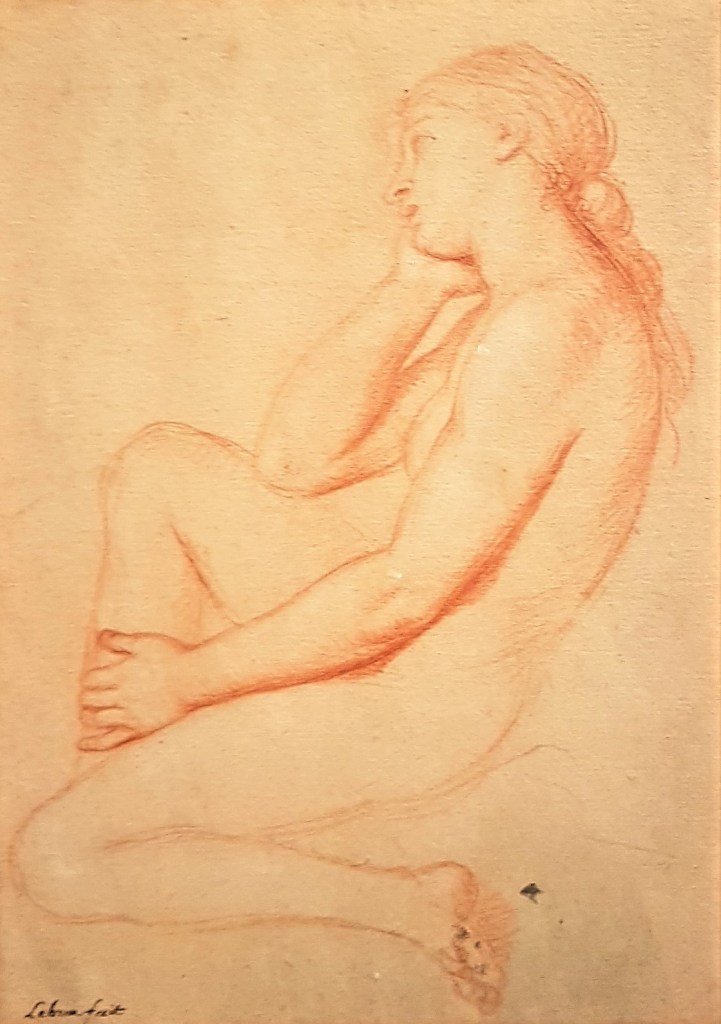
Back in France, the best artists were employed by the Sun King to produce official, royal art and architecture. The most spectacular compositions in the state rooms of the Versailles Palace bear the signature of Charles Le Brun. On display we can admire some of the preparatory sketches but also a female nude of extreme simplicity and modernity. The girl is very different to his exuberant, baroque style, she will nevertheless feature clothed to some of the compositions commissioned by the Sun King.
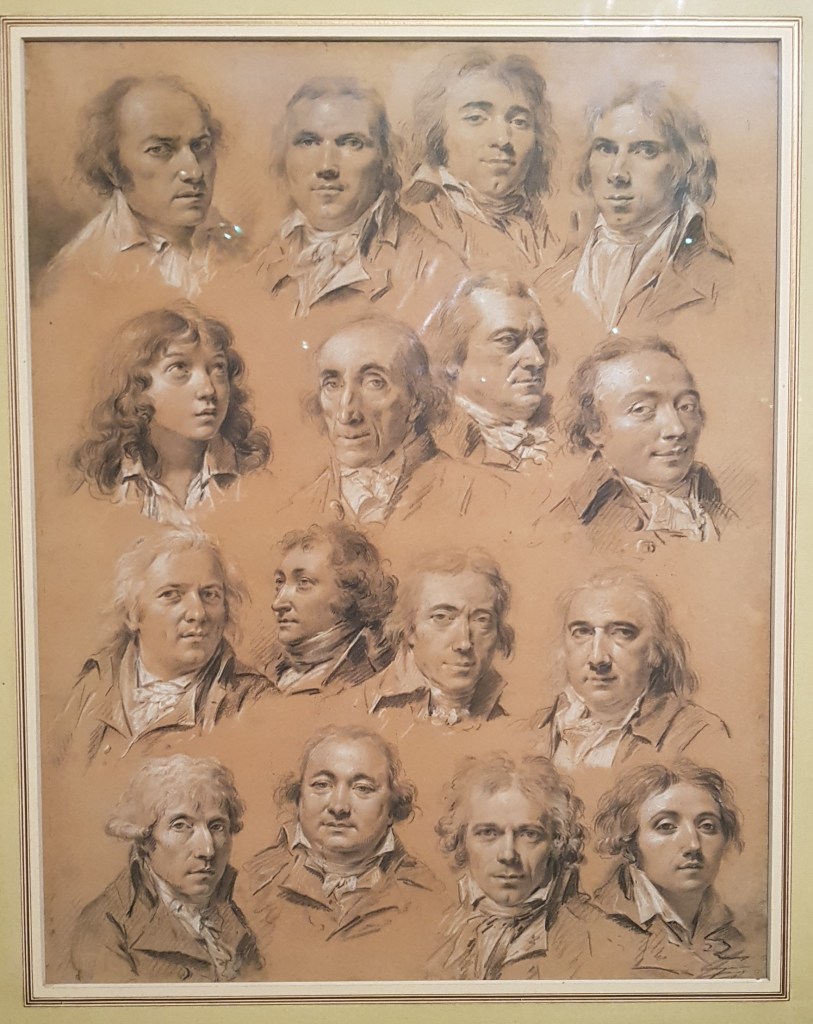
In the following century, art became more intimate and its sole purpose wasn’t any more to glorify the King. Portraits were popular, while artists sought realism and the psychological dimension, as the Sixteen Portraits by Louis-Léopold Bailly demonstrate.
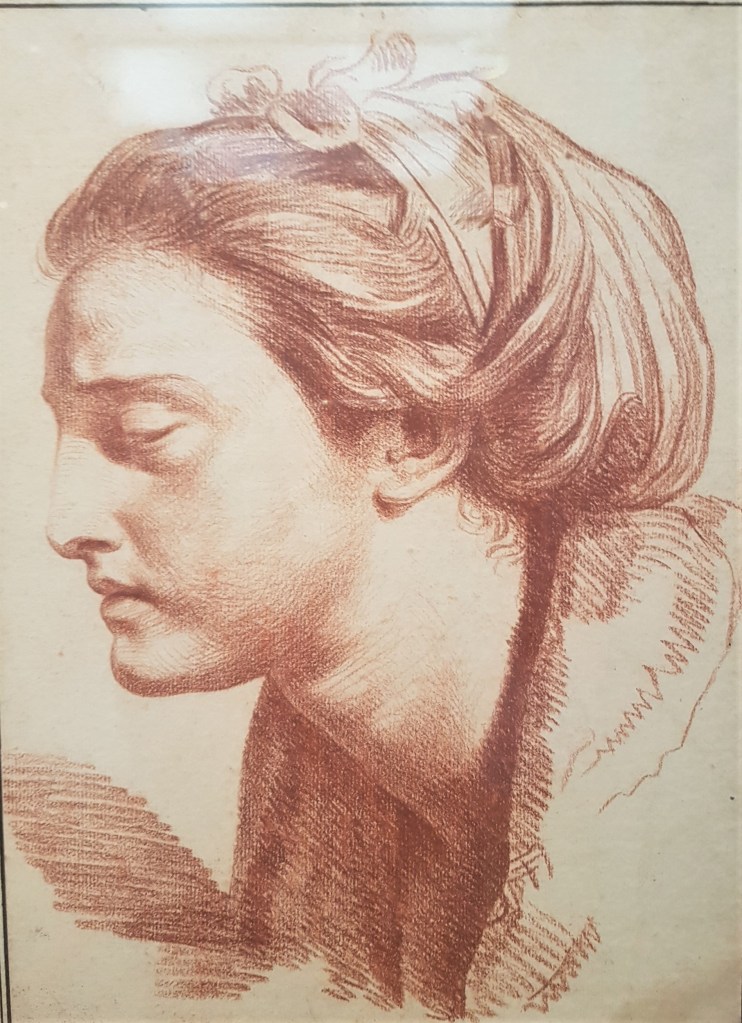

Jean-Baptiste Greuze, a master of genre painting and of depicting humans not as heroes but as fragile souls, was one of the first artists to get interested in the nature of children. Two of his portraits, that also illustrate the excitement of collecting, are displayed next to each other, probably executed as a study for a later composition. They are the mirror images of the same profile. The second image, or counterproof, was obtained by pressing a moistened sheet on the first one, a clever way to work faster on the same idea, keep a replica and, if necessary, use it in reverse.
In the second half of the 18th Century, Neo-classicism was launched, triggered by the discovery of the ruins of Pompeii and Herculaneum. The artists practiced in the new style by travelling once again to Italy, making drawings, and interpreting the fashionable subject-matters inspired from Antiquity.
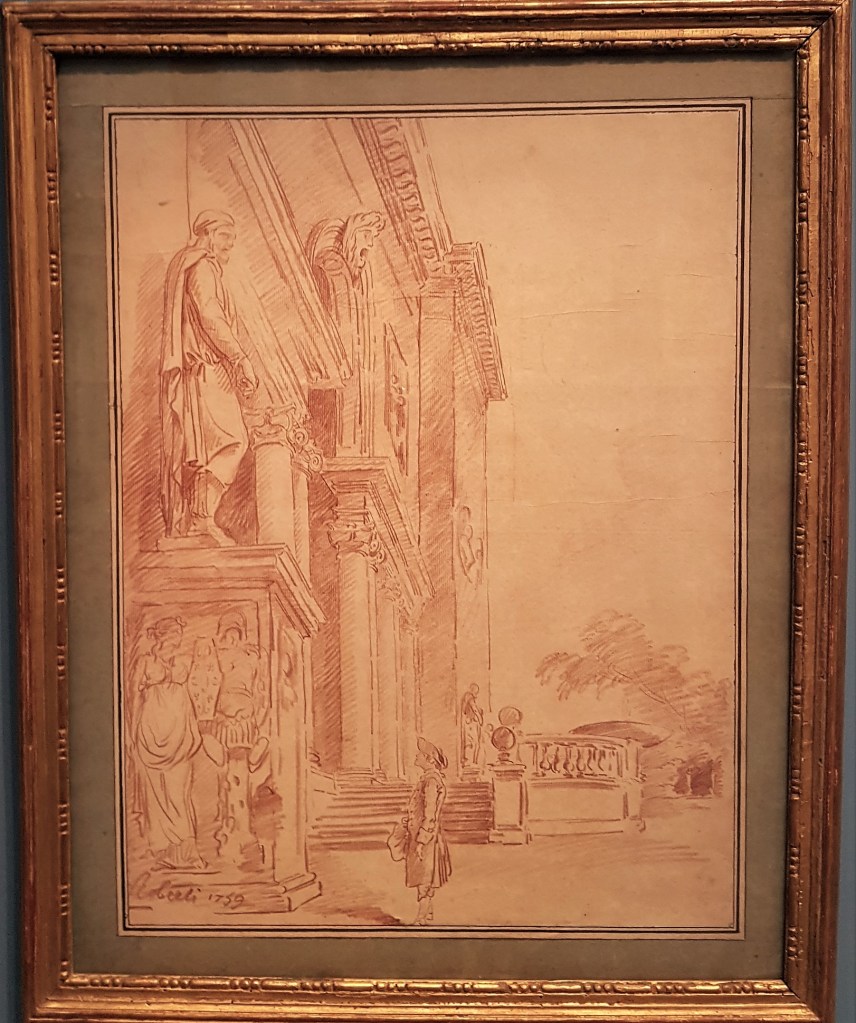
Hubert Robert was one of the most famous painters depicting ruins and he has signed the first interior views of the Louvre when it opened as a museum after the French Revolution. His drawing of the Prat collection is majestic and illustrates the awe of his contemporaries to this revival of the ancient heritage.
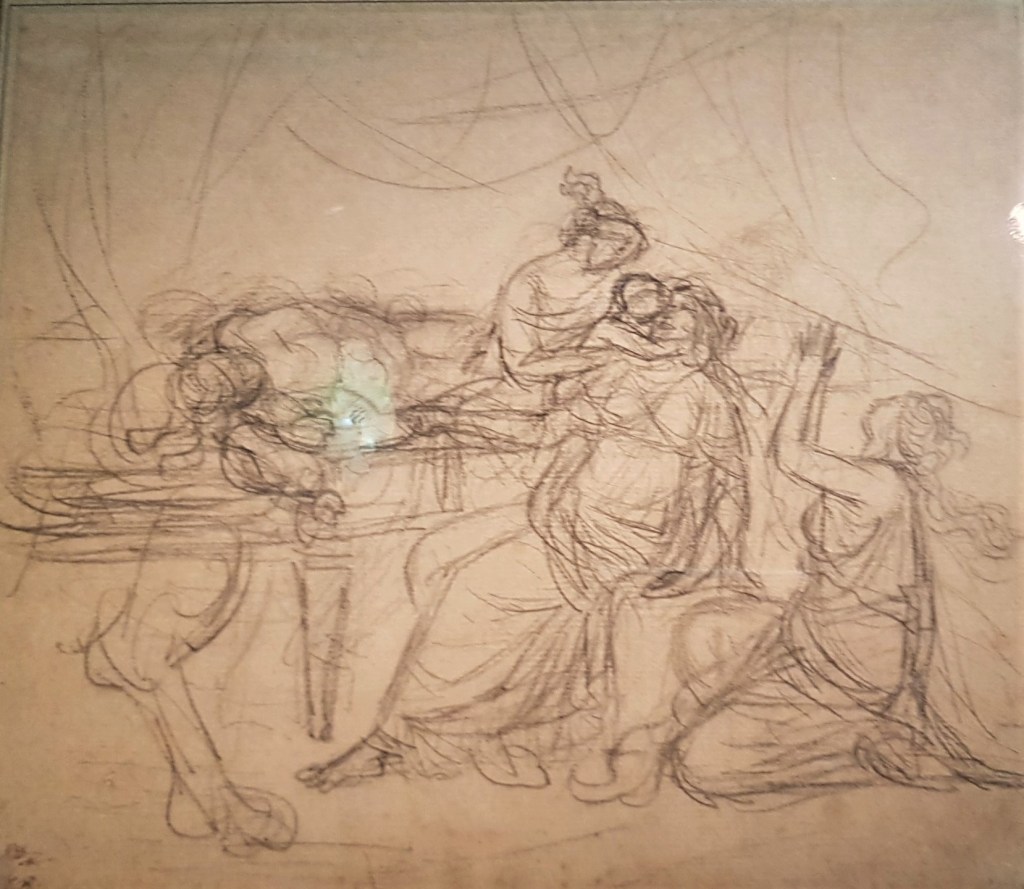
Jacques Louis David, the official painter of Napoleon would become famous for his compositions of ancient and mythological scenes. His practice was to draw nudes, according to the academic, classical training by copying statues, and then dress them accordingly. A drawing considered one of the masterpieces of the Prat collection, is depicting the Pain of Andromache, an episode from the Iliad where the wife of Hector mourns him with their son. In the exhibition, a small reproduction of the painting is on display, and perhaps not in the taste of everyone. Nevertheless, the sketch is so powerful that narrates a different story. The drawing captures the pain in a very direct, intense, and timeless manner, and indeed we can all relate.
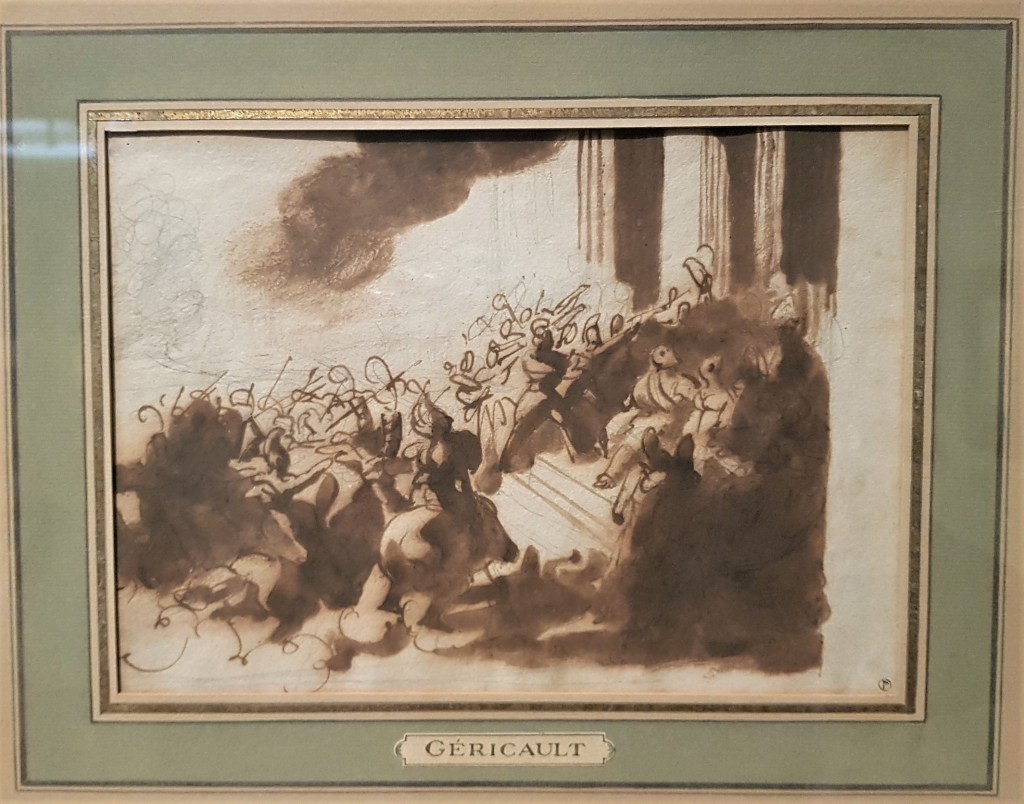
Romanticism that followed, abandoned antiquity for the sake of the destiny of contemporary heroes and anti-heroes. The Raft of the Medusa is one of the most famous paintings in the Louvre Museum, made by Théodore Géricault who died too early for his immense talent. Another drawing of extreme modernity is his, and although it depicts a royal episode, his ability to handle crowds is striking. A special mention is due to the energetic circles that convey all the solemnity of the scene.

A similar rendering can be found in a drawing by Eugène Delacroix, the absolute Romantic painter, made a few months before his death, of the Last Supper, where the drama is superbly conveyed by the ink lines. Possibly, he was aware that no work would be produced anymore, and these sketches are like meditations before the end. Delacroix had said “Drawing is my daily prayer”.
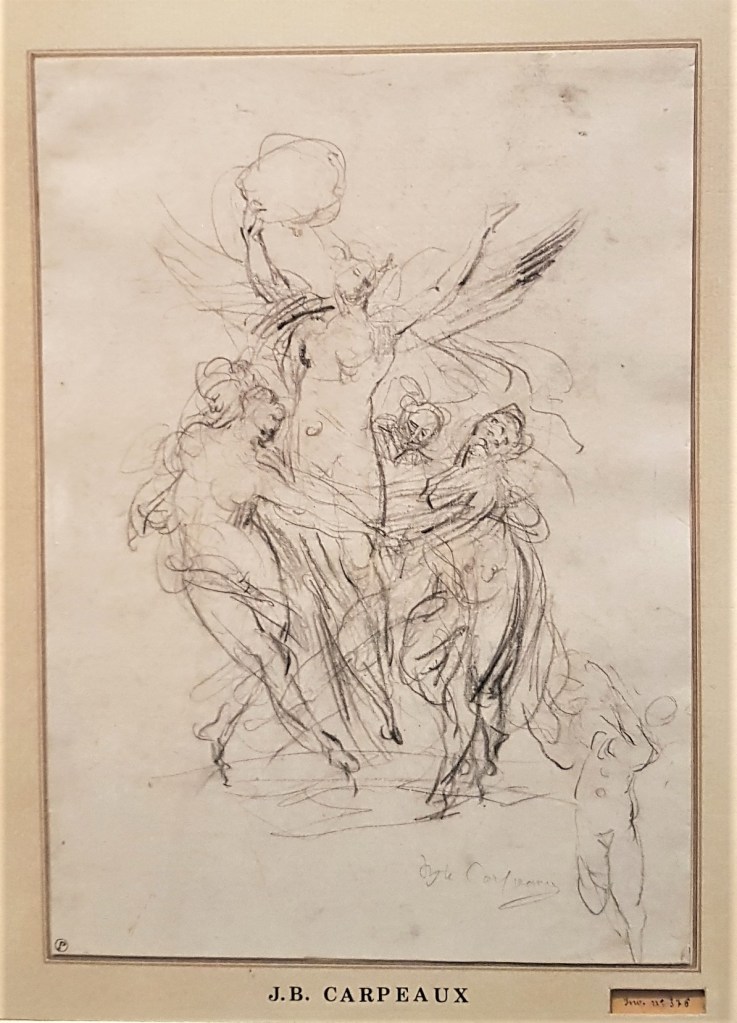
Another type of preparatory sketches is the ones made by sculptors. They must take into account the third dimension, and they draw in an entirely different perspective. The drawing by Jean-Baptiste Carpeaux is one of the last before the execution of the Dance, the most famous sculpture on the façade of the Opera House in Paris; the original conserved today in the Musée d’Orsay. The Dance was considered a scandalous sculpture at its day, mainly because it presents joy without any guilt, perfectly illustrated in the drawing by the postures and gestures of the dancers.
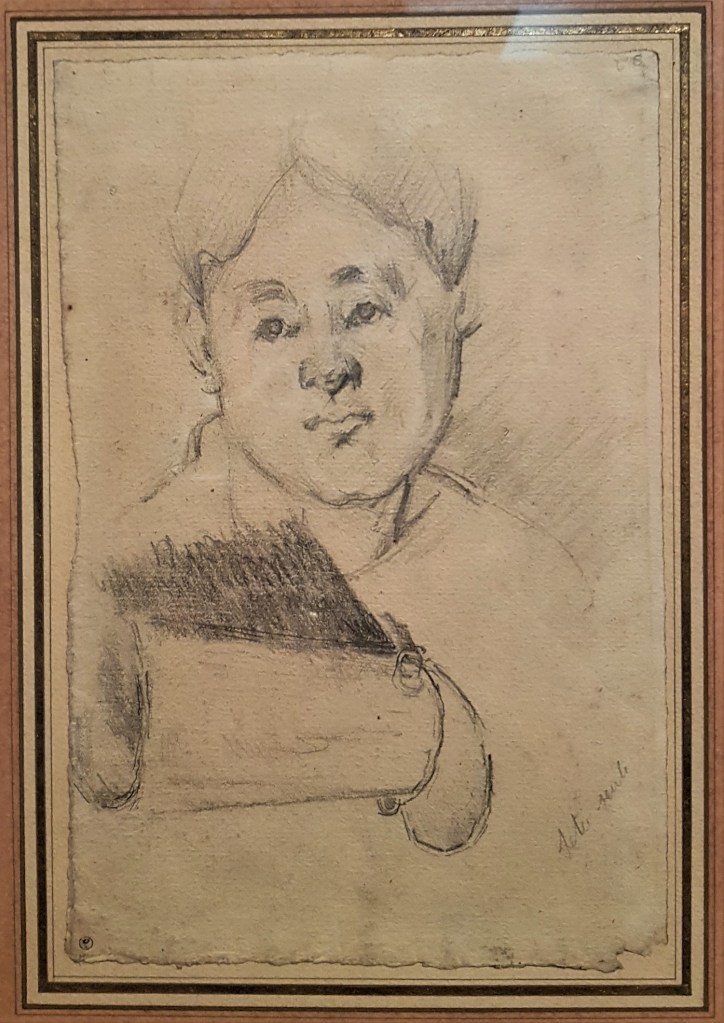
In the end of the 19th century, Impressionism would change the course of Art History. Since the artists followed a different technique, painting quickly and directly to the canvas without any preparation, their drawings are rare. Cezanne was an exception; it would take him years to finish a painting and his drawings bear witness to his unsatisfied nature. His wife Madame Cezanne is depicted in 29 portraits (and 50 drawings) that do not flatter her the slightest, because according to Cezanne, “everything in nature is formed upon the sphere, the cone and the cylinder”. The drawing of the Prat collection can be directly associated to the Portrait of Madame Cezanne with a Coffee Pot, kept in the Musée d’Orsay.
All these famous artists would never have imagined that future generations would appreciate and be inspired by their sketches, no matter how ambitious they might have been. It is a privilege today to enjoy those drawings and learn more on the artworks and the artists who created them.
In the Drawing Room, Masterpieces from the Prat Collection, Petit-Palais, Paris, until October 4, 2020.
All images (c) TheChoiceOfParis
 The Choice of Paris
2 thoughts on “In the Drawing Room: Masterpieces from the Prat Collection, Petit Palais”